






Johanne Masowe family feud over prophet’s grave tests the limits of Zimbabwe’s law—and faith
by BERNARD CHIKETO
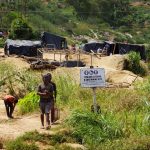
HIGH on the boulder-strewn Dandadzi Hills, the tomb of Peter Jack Masedza lies quiet once more.
For a fortnight in April, it had been guarded by young men with sticks and stones, a makeshift militia defending what they consider a direct portal to the divine.
Masedza, venerated by millions of followers across southern Africa as Baba Johanne Masowe, was buried here in 1973, in a spot he is said to have chosen himself.
For half a century, the faithful have trekked up the slopes to seek blessings from the man they call the “John the Baptist of Africa”.
The church elders now believe a High Court ruling has saved the shrine from desecration—though the legal war is far from over.
The drama erupted when two of Masowe’s sons, Magaga and Reuben Masedza, launched a campaign to exhume their father’s remains and rebury them on a private farm in Marondera, a small town 170km away.
The government initially granted permission, via a provincial administrator, to move the bones to a more “accessible” location.
To the Gospel of God Church International, which claims millions of adherents, the proposal was not logistical but sacrilegious.
As the independent weekly The Standard noted in an editorial, “The battle over Johanne Masowe’s bones encapsulates Zimbabwe’s enduring struggle to reconcile indigenous spiritual authority with the rigidities of post-colonial statute law.”
The church’s legal team, led by Advocates Sylvester Hashiti and Edley Mubaiwa, rushed to the High Court.
Their argument was procedural: the exhumation had been waved through without a hearing, in defiance of the Administrative Justice Act. “The decision was taken without adhering to the law, which requires the Minister to initiate the process and consider all objections,” Advocate Hashiti told the court.
On April 20, Justice Regis Dembure agreed, ruling the authorisation “unlawful” and setting it aside.
For the elders, it was a moment of relief.
They accuse Magaga Masedza in particular of a self-serving plot to relocate the remains to his own land, thereby anointing himself de facto leader and diverting the flow of pilgrims—and their tithes—away from the hilltop community that has guarded the prophet’s legacy.
Yet the sons are undaunted.
Their lawyer, Nickiel Mushangwe, characterises the ruling as a fleeting procedural hiccup. “Our clients retain the right granted by the High Court and upheld by the Supreme Court to exhume their father,” he explained, promising to file a fresh application. “This is a minor setback, not a denial of their substantive rights.”
His confidence rests on a Supreme Court judgment from December, in which Justice Susan Mavangira confirmed that the sons have the right to seek exhumation.
The same ruling, however, stressed that the final say lies with administrative authorities, not judges. Mavangira added an acid observation: the church’s appeal “appears to be appealing against an idea, not an order”, underscoring that courts deal in black-letter law, not claims of divine decree.
Church elders speak bluntly of a “violation of divine decree”. They point also to the widows of Baba Johanne Masowe, elderly women who have spent decades at the shrine as “devoted guardians of his legacy”.
The sons, they claim, are exploiting the widows’ vulnerability to strip them of their estate.
For now, the bones stay put.
Yet the episode lays bare a deeper fault line. Zimbabwe’s legal system can halt an exhumation, but it cannot adjudicate on whether a hilltop is holy ground.
As long as the sons push for a relocation they call dignified and the church sees only robbery dressed as piety, the law will be asked, again and again, to referee a clash between ancestry, property and prophecy.
The prophet’s earthly remains may yet have more journeys to make.
Do you have a story to share? Email bchiketo@gmail.com