






Zimbabwe’s malaria resurgence, and the fading power of DDT
by STAFF WRITER
AN AIRY conference room at Mutare District Development Coordinator’s offices, was heavy with the weight of a grim statistic.
Officials from the Ministry of Health and Child Care had summoned journalists to a training workshop with an unvarnished message: malaria is exploding in the wake of good rains, and bad information kills as surely as the parasite.
Sophia Nezandonyi, Mutare district’s health promotion officer, put it bluntly. “Wrong information costs lives. That is why we need to agree on facts, messages and contact persons so that the public gets correct information at the right time.”
The gathering was part pep talk, part plea for a closer partnership between a health system under strain and the reporters who interpret it for millions.
The alarm is well founded.
By mid-April 2026, Zimbabwe had recorded more than 65,000 malaria cases and 174 deaths—nearly double the toll for the same period in 2025.
The spike marks a brutal reversal from 2024, when only about 17,000 cases and 34 deaths were logged between January and April, coincidentally before cuts to international aid tore bigger holes than in the country’s malaria defenses.
The immediate culprit is rain.
The rains were good this season. But such good rains tend to flood low-lying areas, turning Burma Valley, and poorly regulated mining sites like Penhalonga into mosquito nurseries.
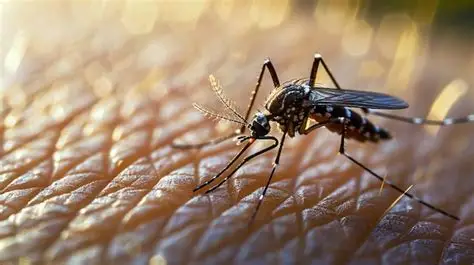
In these hotspots, the female Anopheles mosquito finds stagnant water, warmth and plenty of human blood.
For decades, Zimbabwe’s main weapon against the insect indoors has been a chemical with a controversial past: DDT.
While the world largely banished the compound from agriculture after Rachel Carson’s book “Silent Spring”, the World Health Organisation still sanctions its use for indoor residual spraying (IRS) because it is cheap, long-lasting and, until recently, extremely effective at repelling or killing mosquitoes that alight on treated walls.
The book was published in 1962 and focused primarily on the harmful effects of pesticides, especially DDT, on ecosystems. Carson meticulously documented how these chemicals poisoned not just insects, but birds, animals, water systems, and ultimately, humans.
Zimbabwe’s malaria-control programme grew comfortable with DDT, and for good reason.
Environmental Health Officer Paul Magumure said paired with insecticide-treated nets, it helped slash case numbers so dramatically that some districts were declared malaria-free.
Magumure however said this was being done with international approval and strict us monitoring to ensure that it did not spill into the environment.
Comfort, however, breeds resistance—literally.
Anopheles funestus, one of the principal vectors in Manicaland province, began shrugging off previously effective insecticides like pyrethroids and carbamates years ago.
As far back as 2014-15, entomologists found the species still susceptible to DDT and the organophosphate pirimiphos-methyl in Mutare and neighbouring Mutasa.
Yet even then, warning lights were flashing.
Tests in Binga, Beit Bridge and other districts pointed to possible DDT resistance in the Anopheles gambiae complex.
Today, health officials whisper of “super mosquito bugs” that are no longer felled by the compound that once guaranteed a good night’s sleep.
When DDT stops working, the walls that were supposed to protect families become merely painted surfaces.
The solution that epidemiologists quietly advocate is rotation: swap DDT for a different class of insecticide, such as pirimiphos-methyl, before resistance becomes fixed.
Trials in Mutare and Chimanimani a decade ago showed that pirimiphos-methyl delivered 100% mortality in cone bioassays, though the protective effect faded after four to five months.
Used judiciously, rotation preserves the utility of all chemicals in the arsenal. But change is expensive and bureaucratically sticky.
Donors, who once bankrolled the bulk of Zimbabwe’s malaria-control supplies, are retreating. The “Make America Great Again” era in Washington has turned off the tap that provided more than $180m since 2011.
Other funders have not plugged the gap.
Hence the ministry’s new, somewhat desperate, enthusiasm for the media.
“The media has the power to educate, inform and mobilise communities,” said Melanda Mutetwa, Mutare district information officer. “Working together with the Ministry of Health helps save lives.”
Journalists in the room were quick to note that such co-operation is a two-way street; they complained about officials who take days to return calls when news breaks. The health officials pledged to do their best to ensure timely responses as journalists also did not have the monopoly of spreading information in the era of social media.
A country that had outsourced its malaria fight is scrambling to build something more self-reliant, and communication is the cheapest pillar to erect.
Still, no amount of accurate reporting substitutes for insecticide on walls or rapid diagnostic kits in the hands of community health workers.
Zimbabwe must now finance its own malaria fight. While the Mutare training workshop was a call to action for journalists, the real call is to a government that needs to budget for a disease that punishes the moment it is ignored.
Do you have a story to share? Email bchiketo@gmail.com