





by STAFF WRITER
ON THE Lisima plateau, a vast highland in eastern Angola that feeds four of southern Africa’s great river systems, spiders glow blue, crickets wear armour and elephants linger in the shadows, long since forgotten by science.
After decades of war and isolation, the region is finally giving up its secrets.
An expedition completed in February, led by The Wilderness Project, a conservation organisation founded by the South African explorer Steve Boyes, has documented dozens of species thought to be new to science.
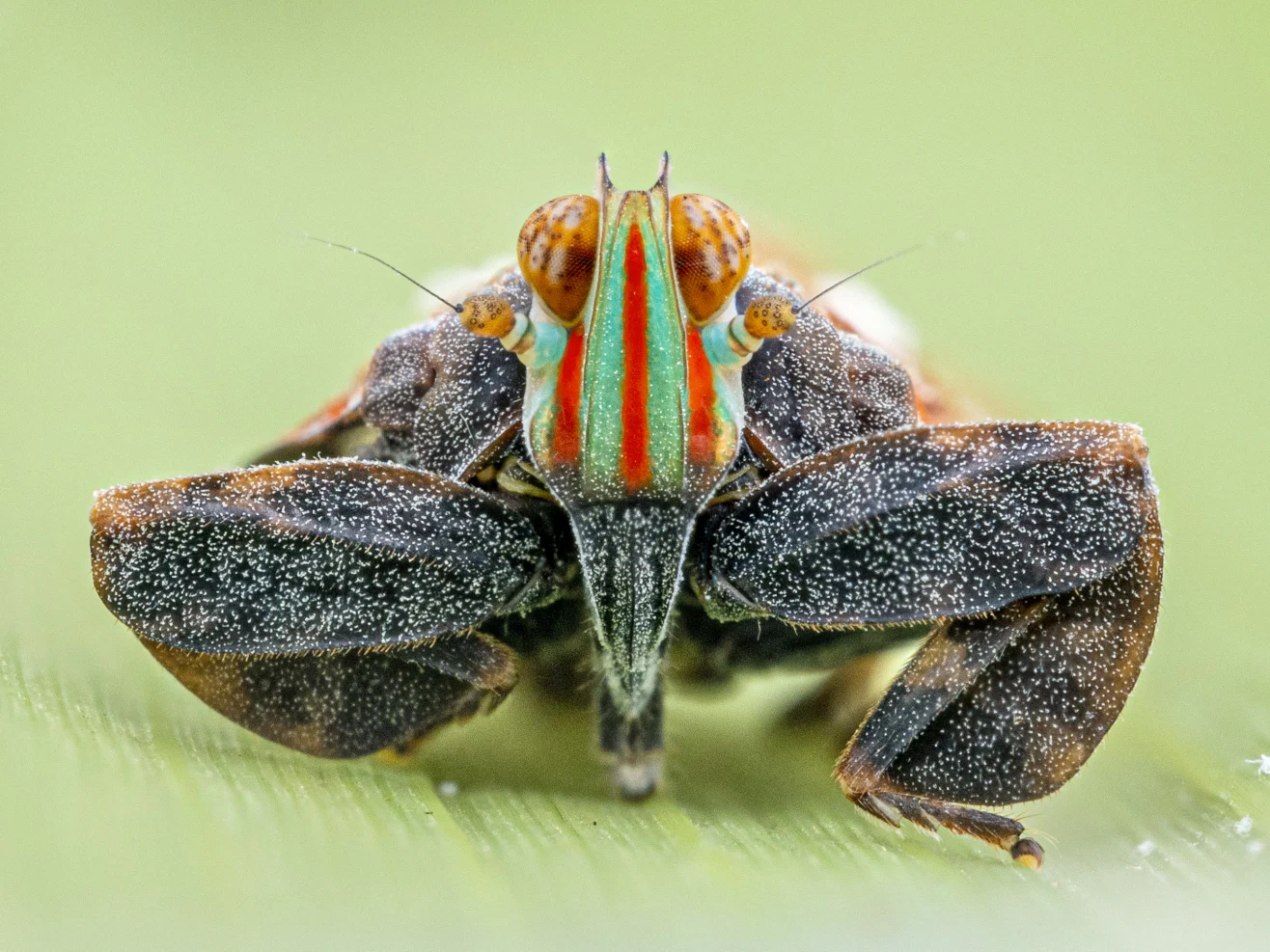
Among them: a crowned crab spider that fluoresces under ultraviolet light (for reasons that remain, delightfully, mysterious), and a ladybird orb-web spider that mimics a poisonous beetle to deter predators.
Three undescribed grasshoppers, katydids and crickets—including one particularly well-armoured specimen—were also recorded, along with eight dragonflies, eight damselflies and eight moths that have never before been formally named.
The survey, called the Cassai Life Atlas, covered the Lisima Lya Mwono (“the Source of Life”), a wetland of international importance designated by the Ramsar convention last October.
The area spans 5.4m hectares and supports ecosystems across more than 110,000 square kilometres.
Its swamps, grasslands and gallery forests are hard to reach.
A ruinous civil war that ended in 2002 left the landscape littered with unexploded mines, which have inadvertently deterred the mining and logging that have destroyed comparable habitats elsewhere in Africa.
As CNN’s Tom Page reported this week, the expedition was not without its trials. Rob Taylor, the expedition leader, told CNN that the team worked at the peak of the rainy season. Convoys spent entire days stuck in mud. Vehicles suffered starter-motor failures, alternator breakdowns and worn brake pads. Several members contracted malaria. The scientists, Taylor said, were “not too fazed” by the delays: whenever the trucks were bogged down, they simply surveyed the nearest waterlogged grassland or swamp forest.
Notable among the known species found was the gaboon adder, a snake with fangs up to five centimetres long—the longest of any venomous serpent. Also present: the flightless bat fly, which “swims” through the fur of bats to drink their blood, and the many-plumed moth, whose wings resemble feathery fronds rather than solid membranes.
The findings will take months or years to publish formally, as taxonomists work to confirm which species are truly new.
But the more urgent question is what happens next.
The plateau’s remoteness has protected it, but that protection is not permanent.
Taylor told CNN that the most vulnerable species are those with narrow ranges or highly specific habitats: dragonflies that depend on clean freshwater, butterflies that rely on host plants easily destroyed by fire or slash-and-burn agriculture.
The Wilderness Project, which helped secure Ramsar recognition for the plateau in 2025, now hopes the survey will bolster the case for stronger formal protection.
“The goal is not simply to document new species,” Taylor said, “but to ensure the habitats they depend on remain intact.”
That ambition faces familiar obstacles: limited government capacity, competing land-use pressures and the ever-present lure of extractive industries.
But for now, on a forgotten highland in Angola, evolution continues to produce marvels unseen—and unthreatened—by the outside world.
Do you have a story to share? Email bchiketo@gmail.com