





by BERNARD CHIKETO
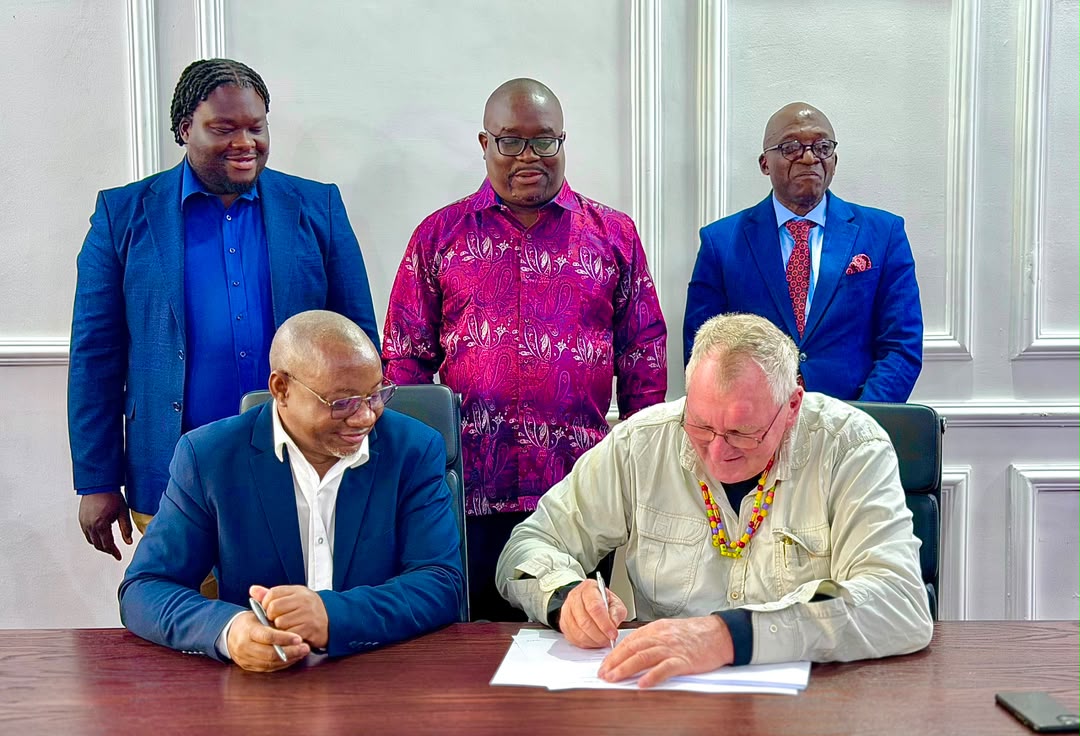
ZIMBABWE’S tourism ministry has inked a $66.9m commercial joint venture with a private consortium to install bulk water, power and telecoms at the Masuwe Special Economic Zone, a 271-hectare tract near the Victoria Falls rainforest.
The deal, signed on Tuesday, is the first tangible output of a public-private partnership framework approved by cabinet in April.
Under the arrangement, Mosi Oa Tunya Development Company—a state-controlled vehicle—contributes land equity. Victoria Seven Investments, part of the J.R. Goddard Consortium, will fund and build the trunk infrastructure.
In return, it secures rights to develop or sell plots for hotels, villas, a golf estate, commercial precincts and a medical facility.
A tourism academy and an international cricket stadium, already under construction, are also slated for the zone.
The project is a test of whether government can use state land to catalyse private capital without ceding control of strategic assets.
For President Emmerson Mnangagwa’s administration, it is also a test of delivery: the Masuwe special economic zone was first gazetted in 2012, but has remained largely undeveloped.
Tourism as an industrial policy
Officiating at the signing, deputy tourism minister Tongai Mafidi Mnangagwa— standing in for Minister Barbra Rwodzi—called the investment “transformative”, arguing that tourism should be treated as infrastructure rather than leisure.
The logic is straightforward: Victoria Falls generates roughly a third of Zimbabwe’s tourist arrivals, but chronic shortages of serviced land have constrained new room stock.
Occupancy rates at top-end lodges routinely exceed 80% in peak season, yet per-visitor spend has lagged competitors such as Botswana’s Okavango Delta, where high-margin safari camps command premium rates.
By front-loading utility networks, the government hopes to unlock a pipeline of private investment that would otherwise be deterred by the cost and risk of off-grid provision.
The deal is structured as a commercial joint venture, not a concession, allowing the state to retain oversight while transferring execution risk to the Goddard consortium.
If the infrastructure is delivered within the projected 24-month timeframe, the Masuwe zone could eventually host over 2,000 beds of upscale accommodation, potentially doubling the Falls’ high-end capacity.
That would strengthen Zimbabwe’s position against regional rivals Zambia, which is expanding its own side of the Falls, and Namibia, which is developing new lodges in the Caprivi Strip.
A broader political economy
The deal also carries symbolic weight. President Mnangagwa has staked his legacy on “Vision 2030”, a pledge to transform Zimbabwe into an upper-middle-income economy.
Tourism is one of the few sectors where the country retains a comparative advantage, yet it has been hamstrung by policy volatility and infrastructure decay. A successful Masuwe project could offer a replicable model for other state-owned land parcels, from the Eastern Highlands to Lake Kariba.
Conversely, failure would reinforce scepticism about Zimbabwe’s ability to execute large-scale PPPs, particularly those involving the president’s family name. The deputy minister’s prominent role at the signing ensures that political capital is now tied to the project’s outcome.
Do you have a story to share? Email bchiketo@gmail.com