





At an elite Anglican mission school in Mutasa – Manicaland, allegations of serial abuse against a teacher have exposed the fragility of the safeguards meant to protect the girl child. As police hunt a fugitive educator, an institution—and a community—confronts uncomfortable questions.
by BERNARD CHIKETO
THE security guards at St David’s Bonda Girls’ High School had seen many things in their years patrolling the mission compound. What they witnessed on the evening of June 21st was not among them.
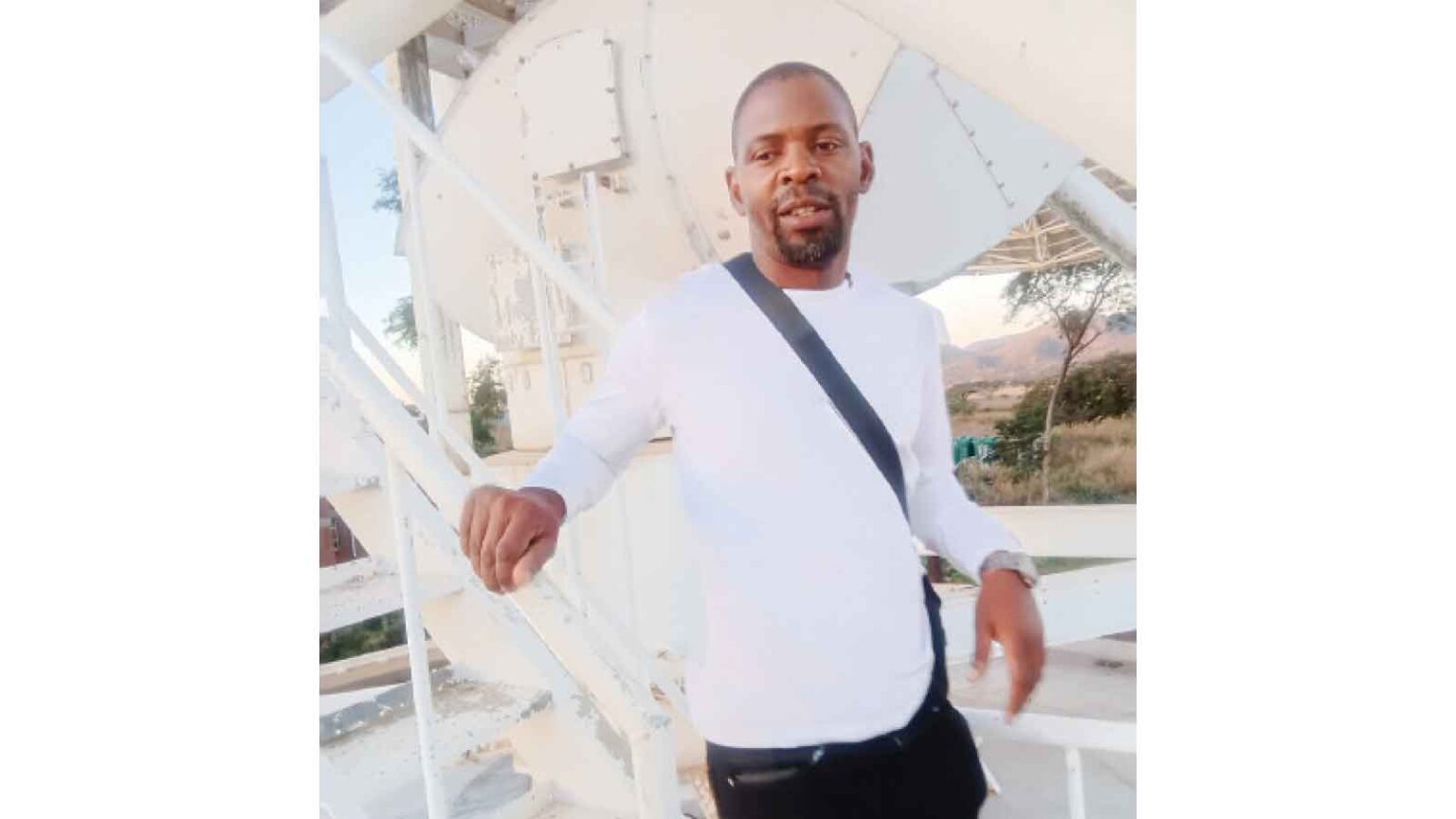
At approximately 6pm, a tinted vehicle belonging to a senior teacher pulled into the school grounds. Anesu Mautsa, 48, a married man and a computer science instructor at the Anglican-run girls-only boarding institution, allegedly collected an Upper Sixth student.
He drove her to his residence within the teachers’ compound—a journey that would unravel a far more disturbing narrative.
Venancia Mupandasekwa, a security guard on duty, observed the pickup and alerted her colleague Jonathan Tika. The two guards proceeded to Mautsa’s house and maintained a discreet watch.
At around 7.30pm, the teacher opened his door, checked his surroundings, and released the student into his vehicle. The guards confronted him.
What followed was telling.
According to police, Mautsa offered each guard US$1,000—a sum worth nearly a year’s wages for many in rural Zimbabwe—to keep silent.
The guards refused and alerted the deputy headmistress, Sekai Musanhu.
By the time she arrived, Mautsa had sped off. He has not been seen since.
The student, interviewed by the deputy headmistress, allegedly disclosed that she had engaged in unprotected sexual intercourse with the teacher on two separate occasions.
On June 23rd, she was escorted to ZRP Mutasa to file a report and referred to Bonda Mission Hospital for medical examination.
National police spokesperson Commissioner Paul Nyathi confirmed that investigations have begun and that a manhunt is underway.
“Police are appealing for information that may lead to the arrest of a teacher believed to have been sexually abusing students in Manicaland province,” he said.
Yet the incident that triggered the manhunt may represent only the visible fragment of a larger pattern.
An anonymous message circulating on WhatsApp, purportedly authored by a student, alleges that Mautsa’s behaviour was an open secret—that he used his tinted vehicle and the school laboratories as “love nests”, that some female students competed for his attention, and that he engaged in unprotected sex with multiple girls, potentially spreading sexually transmitted infections.
“It has been happening since I was in Form One with no action being taken,” the message reads. “The ones supposed to protect us as the girl child are the ones violating us.”
A sacred trust betrayed
St David’s Bonda is no ordinary school.
Founded by the Anglican Diocese of Manicaland, it has educated close to 20,000 girls since its inception and consistently ranks among Zimbabwe’s top performers in both Zimsec and Cambridge examinations.
It is a flagship of the mission’s educational endeavour—a place where the girl child, in the words of headmaster Caston Samanga, is meant to be “catered for”.
The school’s reputation for academic excellence and holistic formation has made it an attractive destination for families across the country.
That reputation now stands in the shadow of grave allegations.
The Anglican Diocese has confirmed the matter, with registrar Ashel Mutungura stating that the school reported the case to police as statutory rape and abuse of authority.
The diocese has notified the Ministry of Primary and Secondary Education to initiate suspension and deregistration proceedings.
The School Development Committee has issued a statement to parents confirming that the matter is under police investigation.
Under Zimbabwean law, the age of sexual consent is 18, elevated from 16 in 2024 to align with the Constitutional Court ruling setting the minimum marriage age at 18.
Sexual intercourse with anyone below that age constitutes an offence under Section 70 of the Criminal Law Code.
The Ministry of Primary and Secondary Education, meanwhile, prohibits “improper association” between teachers and learners—a category that encompasses any sexual relationship between an educator and a pupil. A teacher who crosses that line faces not only criminal prosecution but also professional obliteration.
The legal and regulatory framework, in other words, is unambiguous. The question is whether the institutional culture that surrounds it is equally clear-eyed.
The architecture of failure
The Mautsa case raises uncomfortable questions about the safeguards at even Zimbabwe’s most prestigious institutions.
How did a teacher, allegedly engaged in serial abuse, operate with apparent impunity? Why did it take the vigilance of security guards to expose what an anonymous message suggests was common knowledge?
The school has responded by announcing a review of security measures, the strengthening of counselling services, and the reactivation of its Child Protection Committee.
These are necessary steps.
But they address symptoms rather than causes.
A Child Protection Committee that requires reactivation suggests a system that had, at some point, ceased to function.
Security reviews, however thorough, cannot compensate for a culture in which abuse is whispered about but not reported—or reported but not acted upon.
There is a particular tragedy in the setting.
Mission schools in Zimbabwe have long occupied a special place in the national imagination. They are seen as bastions of discipline, morality, and academic rigour—places where parents send their daughters not just for an education but for formation in character.
The Anglican Diocese of Manicaland, which runs St David’s alongside institutions such as St Faith Mission, has dominated school rankings and enjoys a reputation for excellence. That very reputation can become a shield, insulating institutions from scrutiny and allowing abuses to fester behind walls of prestige.
The anonymous message circulating among students captures this betrayal with raw force: “As I am writing this, my heart is bleeding. I would like to name and shame St David’s Bonda High School, you have failed us as students”.
The school that was meant to protect has, allegedly, become a site of violation. The teacher who was meant to instruct has, allegedly, become a predator.
Due process and the presumption of innocence
It must be stated with emphasis: Anesu Mautsa has not been tried. He has not been convicted.
The allegations against him are serious, and the police are actively seeking his arrest. But in a society that has seen its share of media-fueled trials, the principle of presumption of innocence until proven guilty remains foundational.
The anonymous WhatsApp message, whatever its veracity, cannot substitute for evidence. The social media court, with its summary judgments and irreversible reputational damage, is no court at all.
The police investigation will determine the facts. Medical examination of the complainant will provide evidence. The accounts of other alleged victims, if they come forward, will be weighed. Due process must run its course.
The school, for its part, has an obligation to cooperate fully with authorities while ensuring that its current students receive the support and protection they deserve.
Yet due process and institutional accountability are not incompatible.
The school’s review of its safeguarding mechanisms is appropriate and overdue. The diocese’s decision to notify the ministry and initiate deregistration proceedings is proper.
More importantly, the refusal of the security guards to accept a bribe—an act of integrity that may prove pivotal—deserves recognition.
A reckoning deferred
For the students of St David’s Bonda, the coming weeks will be difficult. They must continue their studies while processing the knowledge that a teacher in their midst stands accused of terrible crimes.
For the alleged victim, the path ahead is longer still—a journey of medical care, trauma support, and the slow work of recovery.
For the Anglican Diocese and for the mission school system more broadly, this case represents a reckoning.
The question is not whether institutions can prevent every act of abuse—that is an impossible standard. The question is whether they have the courage to confront abuse when it occurs, to believe those who report it, and to hold perpetrators accountable regardless of their standing.
The security guards who stood watch outside a teacher’s house on a June evening did their duty. The deputy headmistress who interviewed the student and escorted her to the police did hers. The question now is whether the system—the police, the courts, the ministry, the diocese—will do theirs.
Mautsa remains at large. The manhunt continues. But the hunt for accountability, for a system that truly protects the girl child, has only just begun.
Do you have a story to share? Email bchiketo@gmail.com