





A SPECIAL report on the State of the City Address, first half 2026 compiled by NORMA TSOPO and BERNARD CHIKETO
Leader
The jewel in the east
Zimbabwe’s best-run city is winning awards—and running out of road
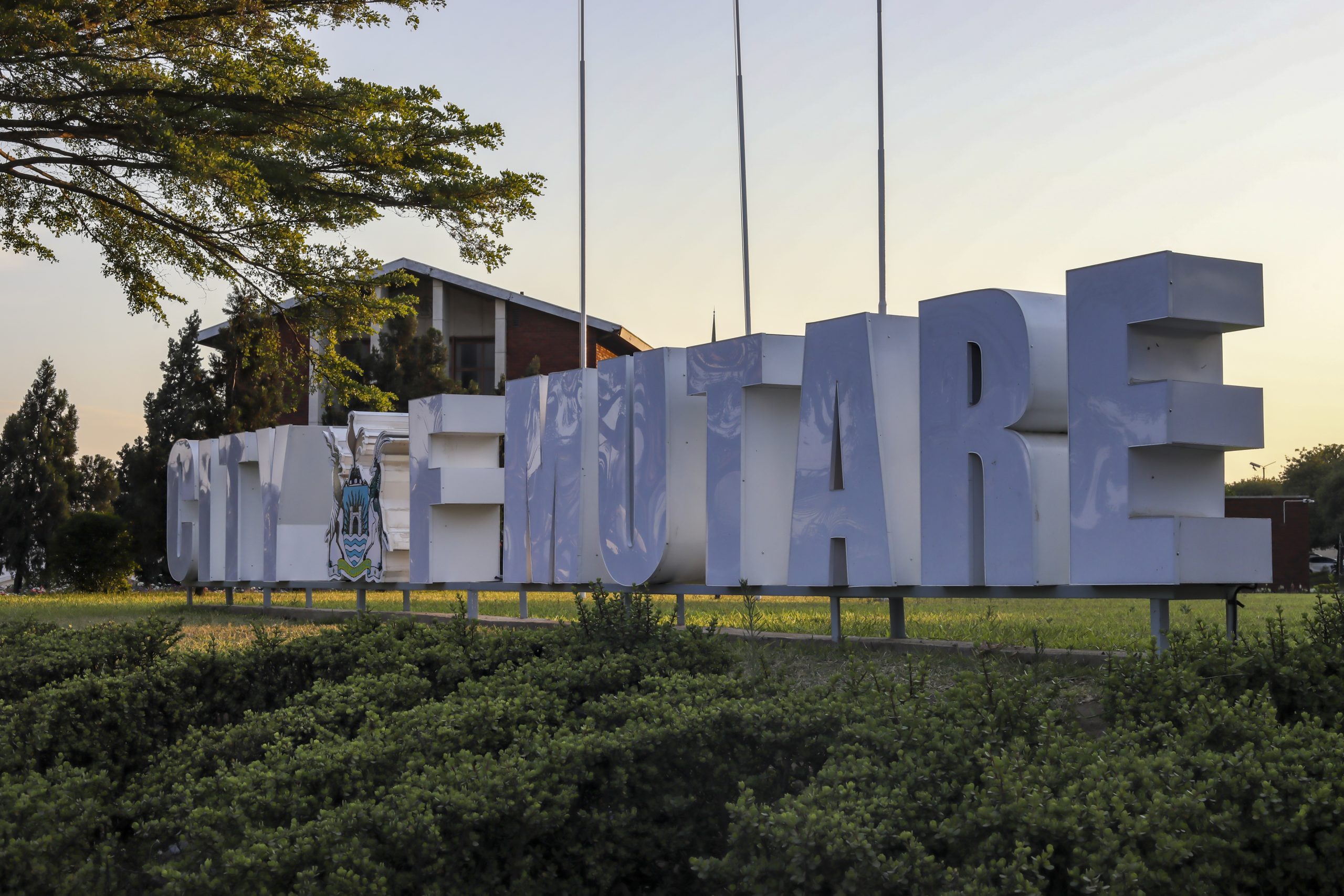
ON A HILL overlooking the border with Mozambique sits a city that, by Zimbabwean standards, has become something of an anomaly.
Mutare, known locally as the “Jewel of the East”, recently won the President’s Award for Performance Excellence in Service Delivery. Its town clerk was named the best in the country. Its revenue collection is up, its employee satisfaction is rising, and its statutory compliance remains flawless.
Yet for all the accolades, the city is struggling with a problem that will be familiar to any Zimbabwean: roads.
Only 139 of its 507 kilometres are trafficable.
Fixing the rest would cost over US$110m. The national road fund has delivered just 35% of its annual allocation.
The government owes the city US$8m for work promised during a conference. And devolution funds have not arrived for two years.
This is the paradox of modern Mutare.
It is a city that collects more, spends responsibly and delivers visibly on water, lighting and education—yet remains hobbled by the very institutions that should be its partners.
The first-ever State of the City Address, delivered by Mayor Simon Chabuka and Town Clerk Blessing Chafesuka, laid the numbers bare.
What emerges is a portrait of municipal competence fighting against fiscal headwinds not of its own making.
The books
Collection agency
Mutare is getting better at getting paid. Now it needs to get paid back
THE NUMBERS tell a story of steady improvement.
In the first half of 2026, Mutare collected ZWG600m against a bill of ZWG812.8m—a collection efficiency of 73.8%. That is up nearly six percentage points from the same period last year.
In hard currency, the city brought in US$13.4m, a 43% jump on H1 2025.
The revenue mix reveals a city punching above its weight.
Water sales and assessment rates together carry the municipal finances, accounting for 20% and 19% of collections respectively.
Employee costs, at 27% of expenditure, remain within a sustainable band. More than half of spending goes to service operations and capital works.
But the ledger has a dark side. The city is owed ZWG946m—US$35.3m—by debtors, up 26% since January.
The Ministry of Defence alone accounts for ZWG75.5m. Government departments and public bodies dominate the debtor book, owing ZWG163m combined.
“Government is the largest debtor category,” the Town Clerk’s report noted with understatement.
The city’s response has been methodical: disconnection notices, legal enforcement, targeted blitzes on high-consumption groups, flexible payment plans, and trained debt collectors.
The approach is working, but it cannot solve the fundamental problem of a central government that does not pay its own bills.
Water and light
Running dry on cash
The city’s strongest service faces its toughest test
WATER, SANITATION and Hygiene was the strongest-rated service in the latest client satisfaction survey.
The city sustains an average of 22 hours of continuous water access, with most properties receiving supply around the clock. Basic coverage has reached 93%.
These are impressive figures by any regional standard. But beneath the surface lurks a problem: non-revenue water stands at 63.5%, against a target of 30%.
The city is overproducing at 470 litres per capita per day, straining treatment infrastructure and wasting scarce resources.
The city is tackling the issue with a US$2.8m loan facility, of which US$1.5m has been drawn for non-revenue water reduction, sewer and road rehabilitation.
A further US$10.2m in municipal bonds and US$3.5m in borrowing powers are in the pipeline.
Public lighting, another flagged weakness, is getting attention too. Two new tower lights have been commissioned at Hobhouse and St Joseph.
Traffic lights at the Robert Mugabe and Herbert Chitepo intersections have been upgraded with AI-powered traffic counters and integrated surveillance.
It is a start—but residents want more.
The road ahead
Potholes and promises
Zimbabwe’s best city has the country’s worst roads
THE CLIENT satisfaction survey was unambiguous: roads are Mutare’s weakest-performing service area, scoring just 53.2%. The reasons are not hard to find.
The city has made progress. Five key corridors—Industrial Road (91% complete), Railway Street (85%), New Castle Road (83%), Glasgow Road (78%) and Bridge Road (73%)—are well advanced. Magamba Road has commenced.
Citywide road grading has been carried out after the rainy season.
But these achievements are dwarfed by the scale of the need.
Over US$110m is required to fix the network. The government committed US$8m for road rehabilitation during the Sanganai Conference—funds that have yet to materialise.
ZINARA, the national road fund, has delivered just 34.65% of the annual allocation.
The city is asking for predictable fund disbursement, enhanced ZINARA allocations, and timely settlement of government bills.
It is a reasonable request. Whether it will be granted is another matter.
The human touch
Building more than roads
Sport, schooling and senior citizens in a city that cares
BEHIND THE numbers lies a city investing in its people.
The first half of 2026 saw the completion of an ICT computer laboratory at Chikanga Primary School, equipped with 50 computers. Classroom blocks were expanded at Hobhouse Primary School. A new polyclinic at Hobhouse is 90% complete.
Sport has been a particular focus.
The Chikanga Sports Complex has its first multi-court completed, with two more under construction. The Sakubva Swimming Pool has a new palisade fence, secured using sports levy income. Sakubva Stadium has received 7,500 bucket seats, awaiting installation.
Perhaps most striking is the Senior Citizens Social Development Programme launched in Sakubva, bringing elders together weekly for exercise and social engagement.
It is a small initiative with outsized meaning in a country where the elderly are too often forgotten.
The city also hosted the “Pride of Mutare” international boxing tournament, drawing competitors from four countries, and launched the City of Mutare Boxing Academy.
In a country hungry for sporting success, it is a bet on the future.
The big picture
A city on its own
Mutare is doing everything right. It needs help anyway
THE STATE of the City Address was, by any measure, a document of competence.
Revenue collection is up. Employee satisfaction has climbed to 72.6%. Client satisfaction stands at 68.8%. The city has recruited four substantive directors, formulated nine new policies, gazetted 18 wetlands and delivered ten staff training programmes.
Yet the challenges section of the report ran to ten items.
Fuel prices spiked 30% in March and April. Fee reductions have cut revenue lines. The NSSA land dispute has added ZWG226.4m to the creditors’ book. And the government has withheld devolution funds for two years, forcing the city to prefinance critical projects from its own resources.
The city’s response has been to look forward.
A comprehensive Local Economic Development Plan is being developed with GIZ.
A City Transformation Strategy is being crafted with the Manicaland State University of Applied Sciences, aiming to build a “modern, smart, and resilient city” driven by innovation, data and technology.
These are admirable ambitions. But they require partners who show up.
The government has set the direction—now it needs to pay the bills.
Do you have a story to share? Email bchiketo@gmail.com