




by BERNARD CHIKETO
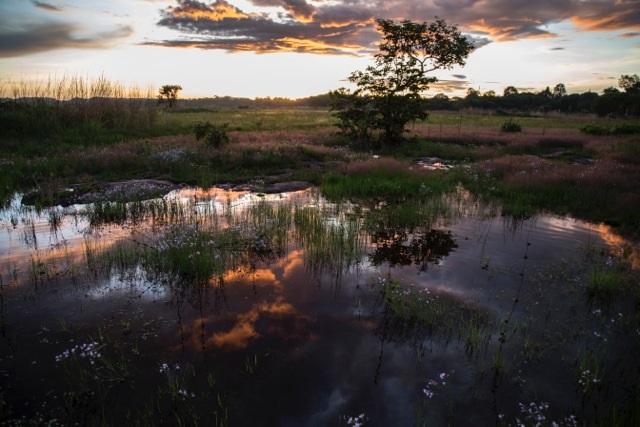
FROM time immemorial, the Monavale Vlei has done exactly what a healthy wetland ought to do. It has sponged up seasonal rains, filtered pollutants, recharged aquifers and released clean water into the Marimba River system feeding Lake Chivero, Harare’s main reservoir.
It has also provided refuge for otters, mongooses and over 240 bird species, including the elusive striped crake.
In 2013, recognising these services, the Ramsar Convention—the global treaty on wetland protection—added Monavale to its list of internationally significant sites.
But in recent weeks, a new kind of creature descended upon the protected vlei: a delegation of Zimbabwean parliamentarians, looking not for water but for residential stands.
Movers arrived, graders idled their engines, and survey stakes went into the ground.
Last weekend, environmental campaigners drew a line in the mud, quite literally.
Activists stood in front of heavy machinery and refused to yield.
The standoff escalated.
Then, on Tuesday, a retreat. Bikita West MP Energy Mutodi, who led the group of nearly two dozen legislators, conceded defeat: no development, no MPs’ houses, not a single brick.
“We have been given the facts,” he said, “we are now well aware that this land is a no-go area.” Equipment has been removed. The swamp, for now, belongs to the frogs.
It should not have required a showdown in the sludge.
The Monavale Wetland—507 hectares of miombo woodland and grassy floodplain in Harare’s northwestern suburbs—is a designated Ramsar site, which carries binding commitments to conservation.
It stores water underground in the dry season and slowly releases it, keeping Lake Chivero from running dry in lean months while absorbing floodwaters that would otherwise swamp downstream suburbs such as Mufakose and Budiriro.
The Manyame catchment basin, of which Monavale is part, supplies the bulk of Harare’s water.
That did not stop the parliamentarians.
The proposed housing scheme, reportedly part of a 2025 government programme distributing residential stands to lawmakers across Harare, Goromonzi and Zvimba, appears to have proceeded with little regard for either environmental law or common sense.
When the Environmental Management Agency belatedly stepped in, officials described it as “disturbing” that a Ramsar site was under siege from the very legislators charged with making the country’s laws.
The outcome has been hailed as a “massive victory for the people” by Doug Coltart, the lawyer representing the environmental activists. Perhaps.
But the fact that such a victory was necessary at all—that Zimbabwe’s lawmakers tried to build houses on a protected floodplain, that the President’s office had to be called in to restore order—says something unflattering about the state of environmental governance in the country.
Muguti, who visited the site this week, put it plainly: “This particular instance was not cleared by Parliament, it was not cleared by Government. This is not how we do things.”
For the amphibians of Monavale, which also number among the vlei’s vocal residents, the retreat of the graders is a relief. For Harare’s water supply, it is a reprieve.
But the episode leaves an uncomfortable question hanging in the air: if the people who make the laws will not protect a Ramsar wetland, who will?
Do you have a story to share? Email bchiketo@gmail.com