






A prison service finds an unlikely stage—and a new tune—for reform
by STAFF WRITER
THE stage at the Mandel Leisure Centre at Watsomba was an unlikely venue for penological innovation. Nor was the Chibuku neShamwari Traditional Dance Competition.
But recently, as drumbeats echoed across the rural business centre, the Zimbabwe Prisons and Correctional Service (ZPCS) offered a striking demonstration of its evolving philosophy.
Three dance troupes drawn from its institutions competed against ten civilian groups in the Delta Beverages sponsored competition—and walked away with not only prize money but also a measure of vindication.
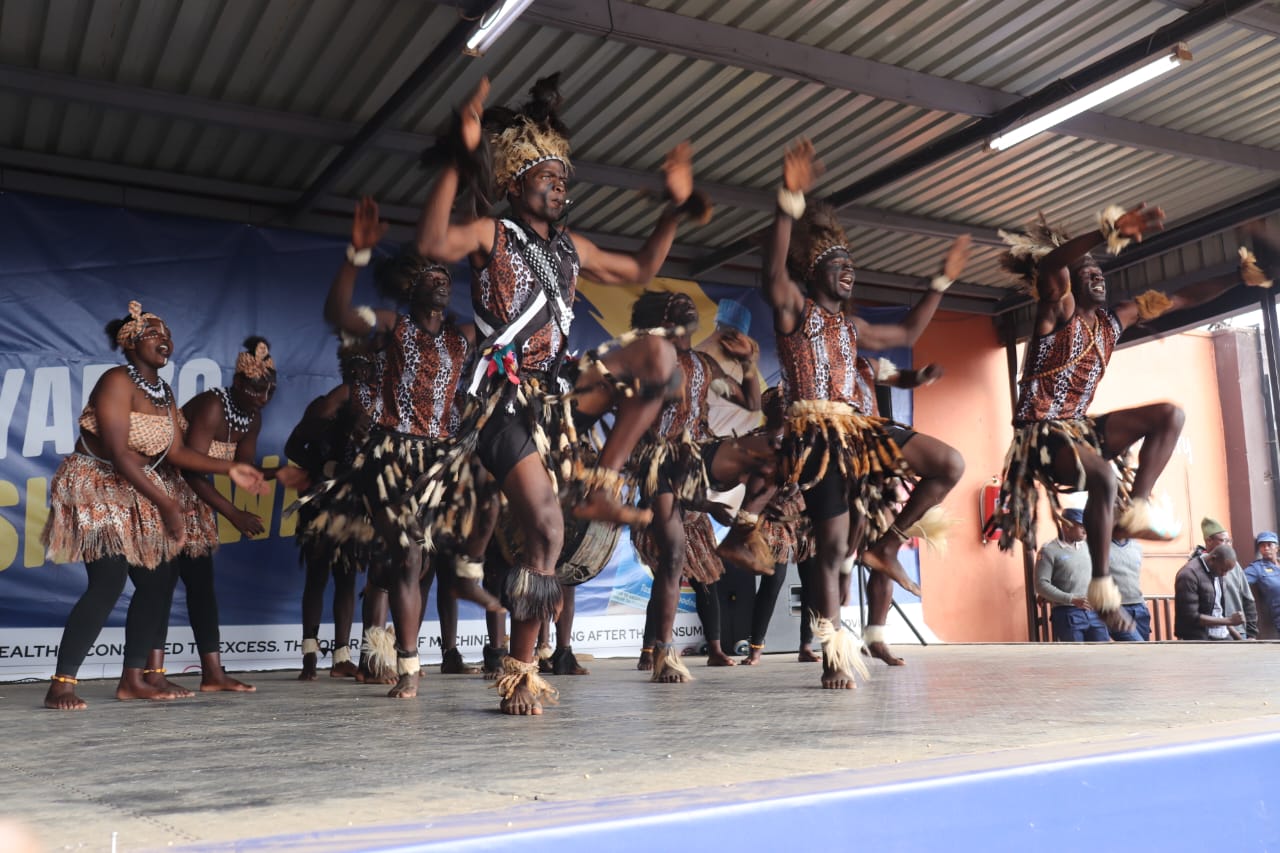
The star turn came from the Manicaland School of Arts (MANSA), based at Mutare Remand Prison.
Their performance of the Chinyambera hunting dance, a vigorous routine mimicking the pursuit of game, earned them second place and US$1,500. First place and US$2,500 went to Dapurahunanzwa Traditional Dance Group, with Chihomva Traditional Dance Group taking third and US$1,000.
Yet for the prison service, the real victory lay in the broader haul: two other groups, Little Kraal Prison Farm’s Chisa Troop and Chipinge Prison’s Chivaraidze Traditional Dance Group, each received US$500 for participation, bringing the total prize purse to US$2,500 for the correctional teams.
More than the money, the event underscored a quiet shift in Zimbabwean corrections. “We are a School of Arts,” noted Correctional Officer Grade Two Leticia Chitsima, a rehabilitation officer at Mutare Remand. “As such we are happy to be showcasing what we teach inmates.”
Her words echo a growing recognition, in penitentiaries from Chipinge to Hwange, that the performing arts can serve as a form of vocational training and psychological therapy—a means of channelling energy, building discipline and, perhaps, fostering a sense of cultural identity that incarceration often erodes.
For the debutants from Little Kraal, the competition was an education in itself. “We have learned a lot from this endeavour as we seek to utilise the arts as a vehicle to rehabilitate offenders,” said Assistant Principal Correctional Officer Fidelis Kajau.
The sentiment was shared by Inmate Obvious Nyaruwa of Chipinge, who noted that participation had revealed the economic potential of the arts—a lesson that may prove as valuable as any work skills programme.
The ZPCS is not alone in this experiment. From Brazil’s theatre programmes to Norway’s music studios, prison systems are increasingly exploring creative expression as a path to reintegration.
Yet in Zimbabwe, where the correctional service is often overshadowed by more visible state institutions, the dance competition offered a rare moment of positive publicity.
It also provided a modest financial return: for a system perennially underfunded, US$2,500 is no trifle.
Still, the deeper significance lies in the symbolism. Traditional dance in Zimbabwe is not mere entertainment; it is a repository of history, ethics and social cohesion.
By mastering its intricate steps, inmates are not just learning choreography but reconnecting with communal values that crime often ruptures.
Whether that rhythm can sustain a lasting rehabilitation remains to be seen. But for one evening in Manicaland, the prisons danced to a different beat—and the audience applauded.
Do you have a story to share? Email bchiketo@gmail.com