






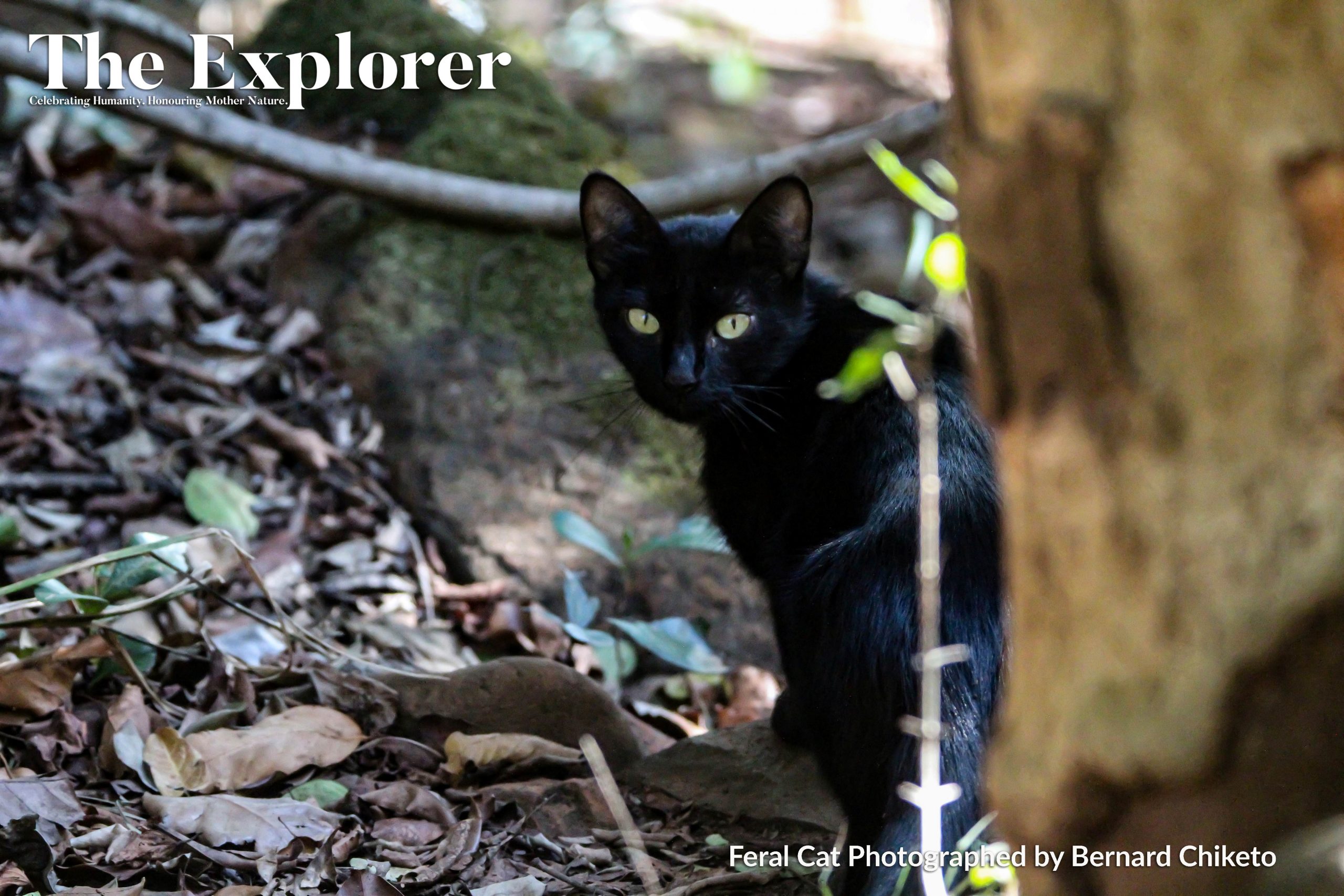
by BERNARD CHIKETO
A SILENT ecological pressure is building in one of Zimbabwe’s major biodiversity hotspots. In tourist-favoured retreats of the Vumba and Chimanimani mountains, usually admired for their unique birds and rare wildlife, an unassuming domestic animal has become a significant conservation concern.
The growing population of free-roaming and feral cats is exerting unsustainable predation on the regions’ small mammals, birds, and reptiles.
Years after this issue was first raised, it persists in a policy vacuum, mirroring a global conservation dilemma that many nations struggle to address effectively.
Hoteliers in the area have long been aware of the problem.
Samir Shasha, owner of the Leopard Rock Hotel in Vumba, in a previous interview noted that he had spent over US$1,400 trying to control a colony of more than 20 cats through capture and sterilisation programs. “We have spayed and neutered twice but somehow we keep missing at least one of each sex and their population grows,” he noted.
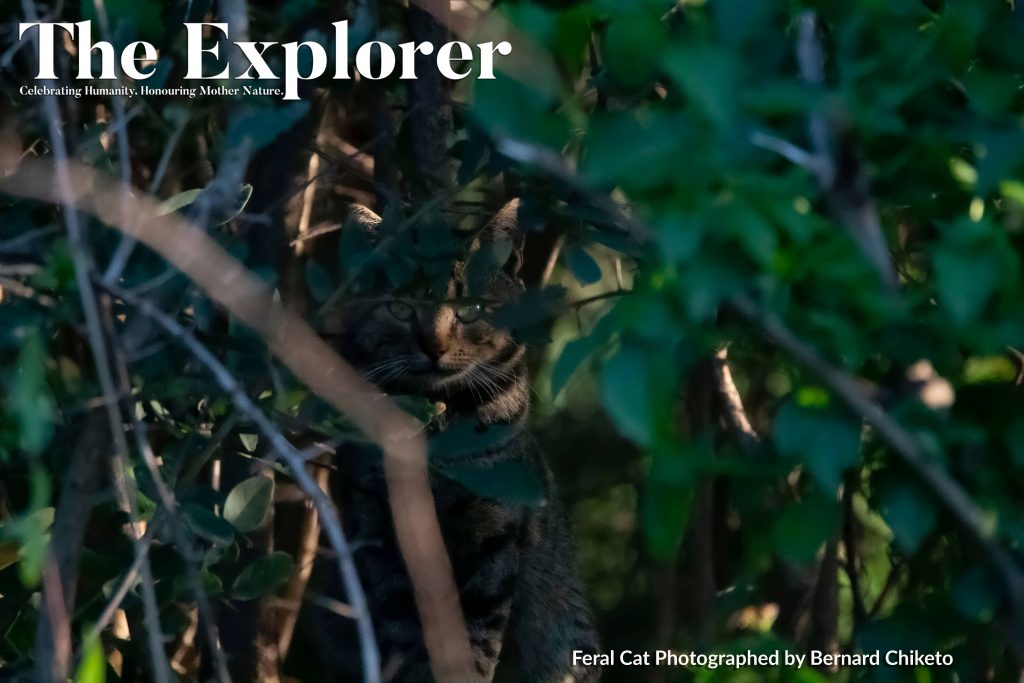
Cat have the notoriety of killing even when they do not wish to eat and will kill until they die.
Despite their affection for the animals, residents like Ken Worsely argue that sterilisation alone is insufficient, as neutered cats “will keep killing wildlife until they die of old age”.
The core of the concern is the potential impact on endemic and near-endemic species, many of which are a perfect meal-size for cats.
While the Zimbabwe Parks and Wildlife Management Authority has stated it has not conducted specific research on the issue, the global evidence of feline impact is devastatingly clear.
A Global Precedent of Ecological Disruption
The world’s most stark warning comes from Australia, where the introduction of cats with European settlers triggered an extinction crisis.
A 2021 federal parliamentary inquiry in Australia found feral cats to be the primary driver of the continent’s modern mammal extinctions, implicated in the disappearance of at least 34 unique species.
The scale of predation is staggering; according to research published in the journal Biological Conservation, each individual feral cat in Australia kills an estimated 390 mammals, 225 reptiles, and 130 birds annually, contributing to a national toll of over 1.4 billion native animals killed every year.
This threat is not confined to Australia.
A landmark 2013 study in the journal Nature Communications concluded that free-roaming cats in the United States kill a staggering 1.3–4.0 billion birds and 6.3–22.3 billion mammals annually, making them the leading anthropogenic cause of bird mortality there.
Globally, research led by the Smithsonian Conservation Biology Institute and published in Nature Communications has shown that cats have contributed to the extinction of at least 63 species of reptiles, birds, and mammals.
The problem is particularly acute on islands, where endemic species evolved without such predators. For example, in Japan’s Ogasawara Islands, the removal of just 131 feral cats led to a tenfold population increase in the critically endangered red-headed pigeon in just three years, demonstrating the swift recovery possible when the pressure is lifted.
The following table summarises the staggering scale of feline predation from key regions:
| Region | Estimated Annual Wildlife Kills by Cats | Key Context & Source |
|---|---|---|
| Australia | 1.4+ billion native animals; 649 million reptiles; ~377 million birds | Figures from a 2021 Australian parliamentary inquiry and research in Biological Conservation. |
| United States | 1.3–4.0 billion birds; 6.3–22.3 billion mammals | Leading cause of bird mortality, as per a 2013 study in Nature Communications. |
| Global Impact | Contributed to ≥63 extinctions; threatens ~360 species | Research from the Smithsonian Institution and others in Nature Communications. |
Policy Paralysis vs. Proven Action
The contrast in national responses to this issue is revealing. Australia has adopted a rigorous, science-led approach.
Its 2021 parliamentary report led to “Project Noah,” promoting large-scale predator-free exclosures and recommending nationwide measures like mandatory cat registration, sterilisation, and nocturnal curfews.
Some conservationists and even animal welfare groups argue for 24-hour containment of pet cats as the only responsible policy.
This stands in sharp relief to the political inertia seen in countries like the United States, where, as conservation scientist Pete Marra notes, advocates for cat control are often “shouted down” by well-funded animal welfare lobbies. Wildlife biologist Christopher Lepczyk describes it as a “political hot potato that no-one wants to handle”.
Zimbabwe currently reflects this second category: a recognised problem with no clear policy direction.
Locally, efforts remain piecemeal and private.
While hotelier Jane High of Chimanimani reported success with a sterilisation program in a park buffer zone and pledged to help coordinate efforts with the Mutare SPCA, these are voluntary initiatives.
The Society for the Prevention of Cruelty to Animals (SPCA) in Mutare, a likely partner, focuses on animal welfare in a context of severe economic constraints, rather than landscape-scale predator control.
The Path Forward for Zimbabwe
The science offers clear, if challenging, solutions. Managed eradication, as seen in Australia and Japan, is the most effective but also the most contentious.
For Zimbabwe’s tourist regions, a multi-tiered strategy may be feasible:
- Immediate Containment: Mandating that all domestic cats in sensitive ecological zones be kept indoors or in secure outdoor enclosures (“catios”) would instantly reduce predation pressure.
- Strategic Sterilisation and Removal: Intensifying and expanding trap-neuter-return (TNR) programs, while ethically complex, can curb population growth. However, as experts note, TNR alone does not stop hunting. It must be coupled with the humane removal of existing feral colonies from core conservation areas.
- Policy and Research Leadership: The Zimbabwean government, through its parks authority, has the opportunity to break the inertia. Commissioning a formal study on the impact of cats in the Vumba and Chimanimani regions would provide the evidence base for a national policy, potentially integrating cat management into broader biodiversity and tourism strategies.
The experience of other nations shows that waiting for the crisis to reach Australian-scale proportions is a recipe for irreversible loss.
For Zimbabwe, the choice is between proactive management of a growing problem or becoming another case study in the long, grim history of invasive predators.
The grace of the region’s unique wildlife may depend on a willingness to make a difficult decision about a beloved, but ecologically disruptive, animal.
This analysis is based on an article first published several years ago by this writer. Its republication is warranted as the core issue remains unaddressed by national policy, and the global body of evidence on the devastating ecological impact of free-roaming cats has only grown more substantial and alarming.
Do you have a story to share? Email bchiketo@gmail.com