






by BERNARD CHIKETO
FOR YEARS, the money sent home by Zimbabweans abroad has been a quiet lifeline. It pays for mathematics textbooks, buys corrugated iron for kitchen roofs, and settles the monthly grocery bill.
But at a forum in Sydney this week, the government put forward a new proposition: keep the school fees coming, but perhaps also take a stake in a lodge or a tour operator.
The Zimbabwe Diaspora Investment Forum, hosted in Australia, sought to pivot the conversation from subsistence to accumulation.
Barbara Rwodzi, the tourism minister, acknowledged the undisputed heavy-lifting done by remittances—estimated at over $1bn annually—in propping up household consumption, educational attainment and urban housing.
This bedrock, she argued, is secure. The next phase, she proposed, involves channelling a portion of these funds into productive assets within the tourism sector.
Described by Rwodzi as “low-hanging fruit”, Zimbabwe’s tourism industry offers a recognisable asset class for the diasporic investor.
The pitch is straightforward: stable foreign-currency earnings, a robust local supply chain, and alignment with the government’s National Development Strategy 2 and Vision 2030.
The minister’s challenge to the room was less a demand and more an invitation to co-own the recovery, leveraging familiarity to bypass the usual hesitancy foreign portfolio managers face.
To sweeten the commercial logic, the ministry deployed cultural gravity.
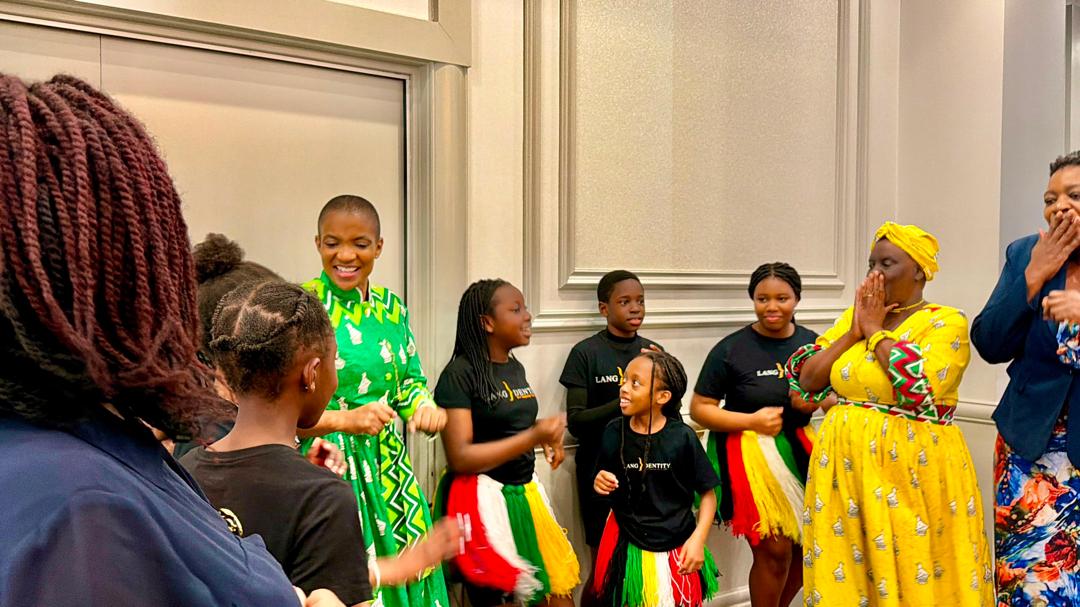
Leah Rose Nyoni, a 13-year-old from Langdentity School, was appointed as the 2026 Junior Tourism Ambassador for Australia.
Her prize—a week-long familiarisation tour of the country’s premier attractions—is a gamble that exposing one young mind to the sights will reverberate through the wider community.
More institutionally, the minister approved an annual “My Roots, My Pride Tour”, coordinated by the Zimbabwe Tourism Authority, aimed specifically at the Australian-born children of emigrants.
The strategy is deliberate: cultivate an emotional claim on the homeland in the next generation to encourage future travel and, eventually, custodial investment.
The evening concluded with a gastronomy dinner, showcasing traditional cuisine. It was a nod to “gastronomy tourism”, a niche that leverages the one thing a bank transfer cannot quite capture: the sensory pull of home.
For the diaspora, the ask is not to choose between funding a sibling’s university degree and backing a hotel venture.
Rather, it is a proposal to do both—securing the present while betting on a more profitable and visible stake in the future.
Whether the million-dollar remittance stream will divert into the tourism balance sheet remains to be seen. But for one night in Sydney, the government made a persuasive case for co-operation over coercion.
Do you have a story to share? Email bchiketo@gmail.com