






by BERNARD CHIKETO
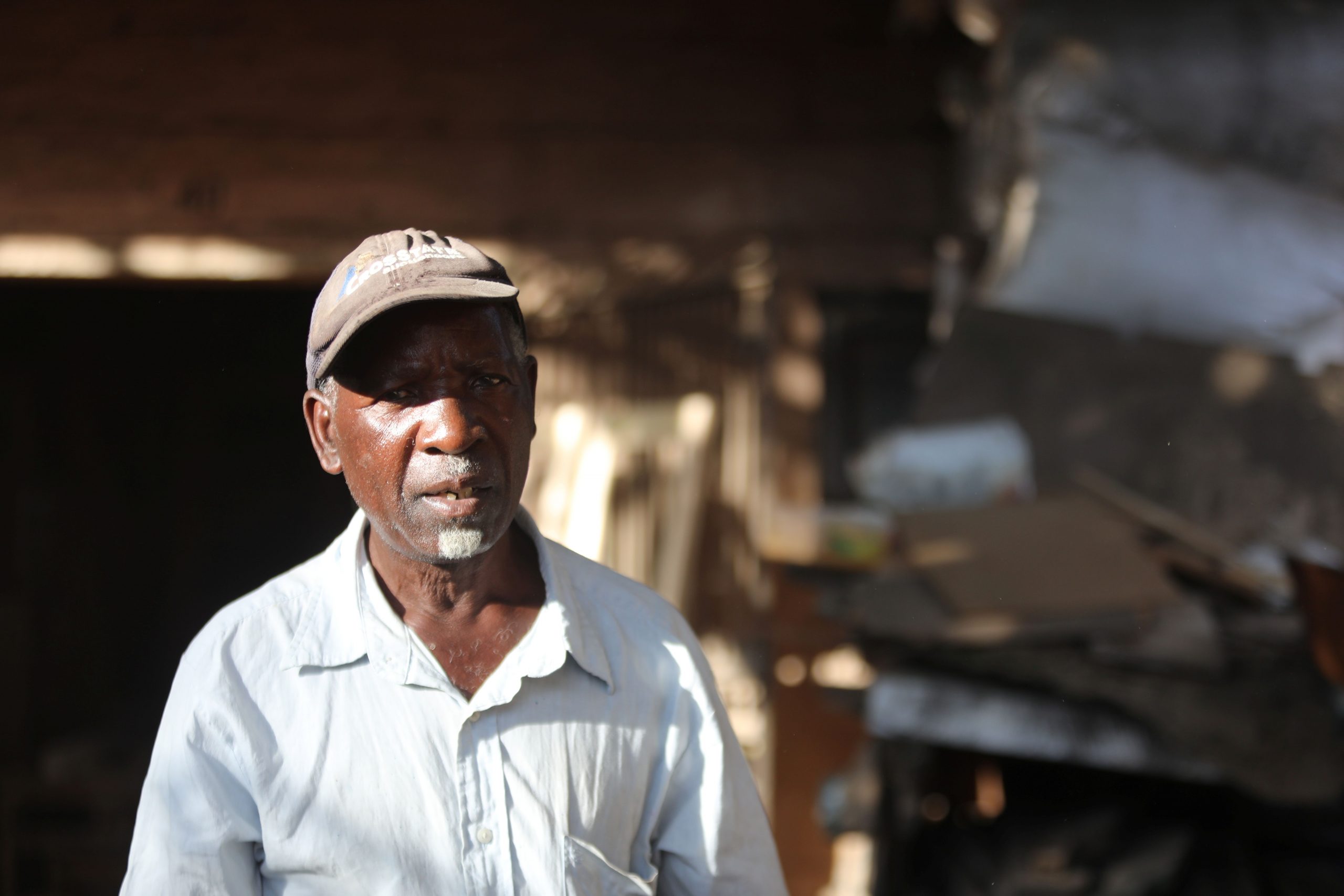
FOR 44 YEARS Michael Chikati has welded and hammered at Sakubva Green Market.
He has held a council lease for four decades.
He has trained generations of artisans who now work independently in this sprawling informal industrial hub.
When the government announced its urban renewal programme, Chikati was elated. Finally, his workspace would receive the modernisation it deserved. His contribution to the local economy was being formally recognised.
Then came the confusion.
After being sidelined, hundreds of artisans pushed to be engaged as council appeared to have been working with individuals and associations that did not have their mandate.
On November 26th 2025, the City of Mutare invited the Murahwa Green Market Association (MGMA) committee to a “stakeholder consultation and design review meeting”. The timing was curious: the meeting was scheduled for December 2nd, less than a week later.
The agenda, according to the letter, was to share with the committee “their views on the relocation date and how we expect to coordinate the relocation exercise”.
Consultation, in this telling, was less about listening than about informing.
By the time the meeting took place, the die was already cast.
Another letter came announcing the suspension of the relocation until important works are done on the temporary site.
On June 8th 2026, another letter arrived: from June 15th to 30th, everyone must move to the new site. The notice was so short that even the council had to admit its temporary relocation site was not ready.
Chikati is not alone. Over 1,000 artisans and traders operate at Sakubva Green Market. Yet the new site has only 300 stands. Simple arithmetic suggests that at least 700 people will be left out.
The council, in its wisdom, has also decided to jumble shop numbers during the relocation, making accountability difficult. Those who have held leases for decades—like Chikati—fear that undeserving operators from elsewhere will crowd them out.
The project itself is not small.
Launched in December 2019 by President Emmerson Mnangagwa, the Sakubva Urban Renewal Project aims to modernise the ageing high-density suburb and transform Mutare into a “smart city” aligned with the government’s Vision 2030.
The total cost is US$6 million, implemented through a special purpose vehicle involving the Ministry of Local Government, Mutare City Council and the National Social Security Authority (NSSA).
NSSA has already injected US$1 million for preparatory works.
Yet the project has been plagued by delays. The initial contractor was dismissed, forcing authorities to restart the tendering process.
The relocation of traders has stalled because infrastructure at the temporary site remains incomplete.
Sakubva Green Market chairman Earnest Muchakuya has said artisans and traders raised concerns over security, road conditions, sanitation and electricity at the relocation site. “We had demands such as a security fence, proper roads and adequate sanitation facilities before we could move,” he said.
The artisans have not taken this lying down.
MGMA a new association that was formed as it appeared that the old association was failing to represent them have engaged lawyers, Mhungu & Associates, who have written to the Town Clerk and the Mayor.
The lawyers’ letter alleges that council officials are “refusing to engage” and that the move is designed not to modernise but to expel current occupants in favour of “insider businessmen and individuals from the diaspora”.
The letter demands transparency, full engagement, and clear communication about the timing of the relocation.
The artisans have also written to the Environmental Management Agency (EMA).
Their complaint is damning: the new site, they say, is a wetland. Zimbabwean law, specifically Section 113 of the Environmental Management Act, prohibits disturbing a wetland without written authorisation.
In December 2025, the government imposed a nationwide ban on wetland development, declaring all mapped wetlands protected ecologically sensitive areas. No construction or land clearing is permitted without a full environmental impact assessment approved by EMA.
Yet at the new Sakubva site, the artisans allege, electricity has been installed less than 30 metres from the river. Toilets have been built in the wetland.
“It would appear as if this is being managed by uneducated people,” says Zachius Nemadziwa, an executive in the MGMA.
Lynne James, of Mutare River Rehabilitation Initiative has also been worried over the sighting of the temporary siting in a wetland and astride an important Sakubva River tributary.
The irony is stark. Zimbabwe’s informal sector now generates an estimated 64% of nominal GDP and employs over 80% of the workforce. It is not a shadow economy operating at the margins; it is the economy.
Sakubva Green Market is a microcosm of this reality: a place where metal fabricators, carpenters, motor mechanics and tinsmiths have built livelihoods over decades, training apprentices and sustaining families.
Yet when the state finally turns its attention to this engine of productivity, it does so with the subtlety of a sledgehammer. No meaningful consultation. Inadequate planning. A relocation site that violates environmental law. A capacity that accommodates less than a third of the existing occupants. A timeline that gives traders two weeks’ notice after months of silence.
Chikati, now in his fifth decade of welding, may not be part of the market’s future. “This is a fact on the ground,” he says. The question is whether anyone in Mutare’s council chambers has stopped to consider what that fact says about their competence—and their contempt for the people who actually keep the local economy running.
The traders have proposed a way forward: direct communications between the Green Market Association and the municipality; consideration of current allocated spaces first; transparency and full engagement. It is not an unreasonable request. It is, in fact, the bare minimum of good governance.
Whether Mutare City Council and NSSA are capable of meeting that minimum remains to be seen. The clock is ticking. The traders have until June 30th. And the wetland, as the law makes clear, is not theirs to build on.
Do you have a story to share? Email bchiketo@gmail.com