





by BERNARD CHIKETO
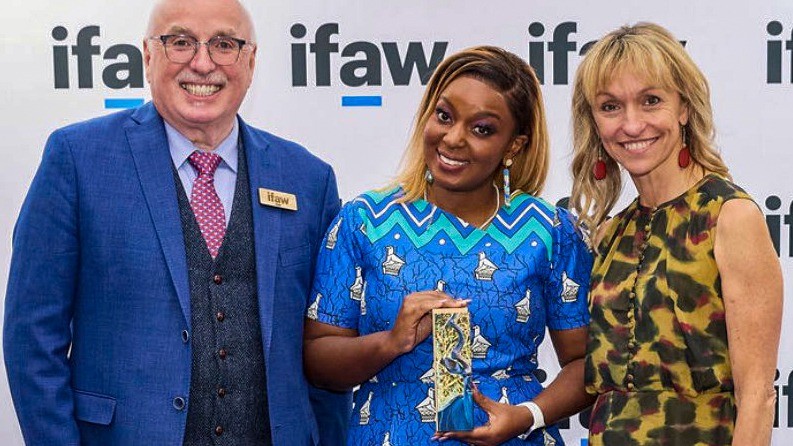
WHEN Ever Chinoda received the 2025 Women in Conservation Award in London last week, the accolade was more than a personal triumph.
Presented by the International Fund for Animal Welfare (IFAW) at its 25th Animal Action Awards, it signaled a growing recognition that saving Africa’s wildlife requires not just rangers and biologists, but legal architects.
Ms Chinoda, a Zimbabwean lawyer, is building a durable framework for wildlife justice, one case at a time. In a characteristically generous move, she announced she would share her £1,000 prize with her students.
Ms Chinoda’s path was unconventional. She initially envisioned a career in environmental science before bowing to parental pressure to study law.
Her perspective transformed during her work with the Zimbabwe Parks and Wildlife Management Authority, particularly during the global outcry over the killing of Cecil the Lion in 2015. “Life seems to have shepherded me on this animal law path,” she reflects.
The case exposed critical gaps in legal protection, propelling her to pursue a Master’s in Animal Law in the United States. There, she founded Speak Out For Animals (SOFA) in 2017, with a mission to “protect animals through the legal system.”
She knew that lasting impact required embedding her mission in academia. In 2021, as IFAW notes in its award citation, she introduced the first wildlife law modules in Zimbabwe—and indeed in all of Africa—at Great Zimbabwe University and the University of Zimbabwe.
The curriculum now educates 72 students across various disciplines. Her educational revolution accelerated in 2024 with the establishment of the Nature Extent Learning Centre, Africa’s first green school dedicated to wildlife law, which offers the continent’s only government-recognised diploma in the field.
Her strategy is multipronged. Through formal university modules and professional workshops, SOFA has trained over 500 legal officers, including prosecutors and police.
The organisation has also produced practical legal resources, such as the Wildlife Legal Guide, which have become indispensable for law enforcement.
Furthermore, Ms Chinoda served as a consultant on the official Zimbabwe Environmental Crime Prosecution Manual, directly influencing national policy.
This work addresses a profound crisis. According to the United Nations Office on Drugs and Crime, wildlife crime is a $23bn-a-year illicit trade.
Zimbabwe, home to Africa’s second-largest elephant population, lost over 2,000 elephants between 2015 and 2020, according to a 2021 report from the Zimbabwe Conservation Task Force.
A study by the International Union for Conservation of Nature found that fewer than 1% of conservation officers in sub-Saharan Africa have formal legal training. “They need somebody who can speak on their behalf because they cannot go into court and argue,” Ms Chinoda told Prime Progress, an African policy journal.
Despite the international recognition, her focus remains on expansion. She envisions an Animal Law Learning Institution for pan-African knowledge exchange and is planning the continent’s first Animal Law Conference for 2025.
As IFAW’s president, Azzedine Downes, noted at the ceremony, award winners like Ms Chinoda show an “unwavering commitment to conservation.”
In a field dominated by biological science, she has proven that one of Africa’s most endangered species may be the legal framework designed to protect its wildlife. Thanks to her, a new generation of lawyers is learning to roar back in court.
Do you have a story to share? Email bchiketo@gmail.com