





…as carbon dioxide, ban on veld fire threatens Zimbabwe’s montane grasslands
by BERNARD CHIKETO
MATSAUTSO, a remote village in Nyanga, is increasingly being clocked by forest. And as expanding woody vegetation cover blares the boundary between the village and its wild environs, setting up an intriguing human-wildlife conflict.
“There are thickets everywhere and they are offering habitat to hyenas and pythons who are now preying on our livestock,” says Henry Nyapokoto, throwing up his hands in exasperation.
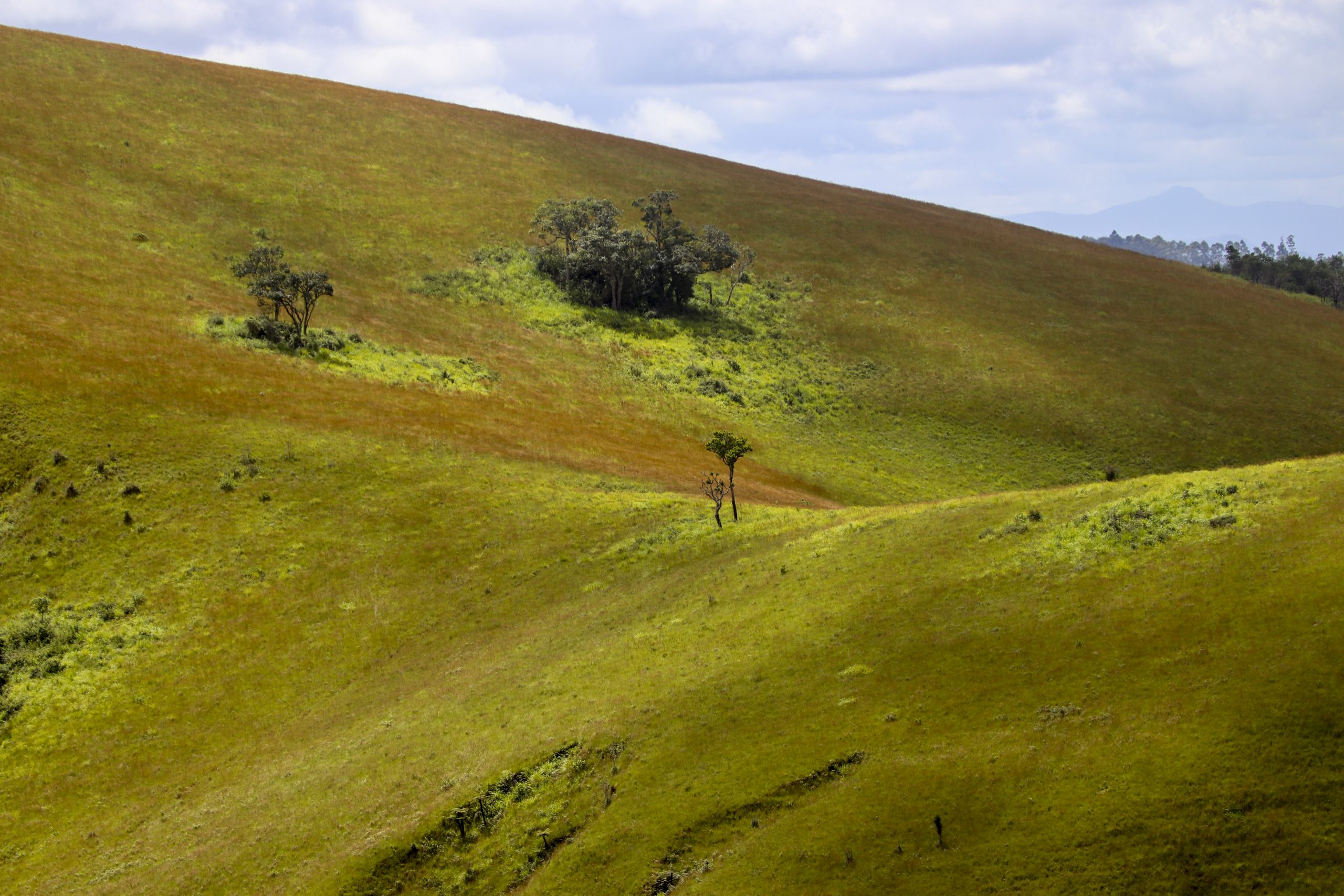
The villagers are concerned about the ecological change of their landscape in which their grasslands – grazing lands for goats and cattle – are being eaten up by woody plants.
“Our grazing lands are also being supplanted by woody vegetation,” Nyapokoto notes with grave concern for the rate at which his rural home’s environment is transforming.
The area’s ecological change is due to two unlikely forces – carbon dioxide, a greenhouse gas, and a blanket ban on the use of veld fire with government not even considering having a policy on prescribed veld fires for managing grasslands.
Birdlife Zimbabwe CEO Julia Pierini bemoans the absence of any legislation that acknowledges grasslands as deserving of conservation as indigenous forests which makes their conservation difficult.
Dr Ralph Clark, Director of the Afromontane Research Unit (ARU), University of the Free State in an exclusive interview with The Explorer notes that elevated CO₂ levels enhance photosynthesis in plants, particularly in woody species, in a phenomenon known as CO₂ fertilization.
“Woody plants, such as shrubs and trees, have a competitive advantage under higher CO₂ conditions because they can photosynthesize more efficiently and grow faster,” Dr Clark says.
The situation is further worsened with fast-growing exotics.
“It will be as if they’re now on steroids,” Chris Chapano a plant expert with the National Herbarium says.
The region’s unique combination of different altitudes, soils and rain results in a high level of endemism, especially in flora the plant expert says.
One of the region’s major hotspots for flora, Chimanimani Mountains, is exceptionally diverse. The area is home to over 2,182 plant species, representing more than 30 percent of Zimbabwe’s total plant diversity, according to Zimbabwe National Parks and Wildlife on their website. Among these, 74 species are endemic to the Chimanimani mountains as they are not found anywhere else in the world.
Chapano notes that the encroachment of forest into grasslands is also negatively affecting plant diversity in the high-altitude grasslands which are home to many endemic plants that are being replaced by monocultures of either invasive acacia or fast-growing invasive plants like wattle, eucalyptus, lantana camara and the fast-spreading Vernonanthura polyanthes, bee bush.
Invasive aliens are also threatening this plant biodiversity according to Sue Childes a local ecologist.
“Alien plants change the soil pH, nutrient levels and microflora which can prevent the indigenous plant seeds from germinating and establishing themselves,” Childes says.
Dr Clark fears that an area like Vumba has probably had multiple local population extinctions of endemic and conservation important grassland species as its high-altitude grasslands continue to be transformed into forests.
Invariably other life forms that thrive on grasslands are also pushed out as their habitat shrinks as is the case with globally endangered bird species like Montane Blue Swallows in Vumba being crowded out by growing forest.
Fire, Dr Clark argues, could be friend in the preservation and conservation of grasslands at three-year intervals. Such fires would kill young tree saplings before they grow to fire resistant sizes and establish themselves in the grasslands.
While this may sound as counterintuitive, in Zimbabwe, prescribed veld fires have traditionally been used as a land management tool to control woody plant encroachment and maintain grassland ecosystems.
Even the United States (U.S.) Fish and Wildlife Service confirms on its website that it uses fire to manage the lands and ecosystems we care for, resist the spread of invasive species, provide healthy habitats for wildlife, and support the natural cycle of nutrients that soils need to stay healthy.
To them, fire is an “important tool for restoring and preserving natural grasslands, which are essential to the survival of thousands of species that rely on the grasses and wildflowers of healthy prairies.”
However, due to the destructive nature of uncontrolled fires and their impact on human settlements and agriculture, authorities have implemented strict bans on their use.
Unfortunately, there have not been advocates for the use of fire as a tool to manage grasslands.
Locals, Nyapokoto notes, have been using fire to purposefully burning areas at specific times and intensities, to maintain their pastures.
“We need fire to maintain our lands because despite our current struggles with wildlife and grazing land as grasslands shrink, we are likely going to have challenges with highly intense fires as these overgrown forests have a lot of fuel in them,” Nyapokoto said.
This transformation is threatening local livelihoods but beyond agricultural productivity, it is also threatening biodiversity in the eastern highlands.
Dr Clark feels that the challenges particularly in “Vumba are firstly to keep native forest ecologically intact by managing forest invaders like ginger lily and secondly to conserve remaining grassland and restoring these where possible by controlling woody invaders and implementing best practice fire management for biodiversity likely probably burn every three years.”
Fire can also be an important tool in removing invasive plants and restoring natural habitats according to experts.
Prescribed and controlled burns can help to maintain specific habitat for species communities preferred, sustain the long-term health of their environment for sustainable use and prevent the kind of massive wildfires that are seen across the world today.
Many ecosystems reset after a fire, giving native plants much-needed space and time to recover — not just from the fire, but from potentially harmful overgrowth of invasive species, according to U.S. Fish and Wildlife Services.
Over time, unchecked overgrowth leads to a gradual transition of habitat, which may no longer be able to support native plants and wildlife, environmental experts warn.
This is what is happening across the Eastern Highlands due to removal of fire from the equation and in the abundance of atmospheric carbon dioxide especially with places like Nyapokoto’s village where a ban of fire is locally being zealously enforced by indifferent and legalistic local traditional leaders.
“We will fine at least a goat for anyone who starts a fire and also institute criminal proceedings against anyone who does,” Chief Saunyama said.
It’s the law.
And the country does not have any policy or regulation that legalises the use of fire to manage landscapes using fire.
While veld fires can be beneficial for grassland management, their misuse has led to devastating wildfires that destroy property and endanger lives seemingly justifying the blanket ban.
The Environmental Management Agency (EMA) which is at the fore of campaigning against wildfires, emphasizes the importance of maintaining a ban on veld fires which they noted in a statement this week that three people have already died in veldfire related incidents since the start of the fire season on July 31. The fire season ends on October 31.
A fire season is a veldfire restriction period.
“Already the country has recorded 1 792 fire incidents by 24 September 2025 with a cumulative total area of 582 922.60 hectares (ha) being burnt. While during the same period in 2024, a total of 675 128.9 ha was burnt from 3 035 incidences.
“The veldfire land loss has decreased by 13.66 percent in 2025, attributed to increased residual moisture and green vegetation earlier in the season associated with late rains. However, the situation deteriorated sharply in recent weeks due to changing weather patterns, with the average area burnt per incident skyrocketing to 209.93 hectares in 2025, compared to just 35.31 hectares in 2024,” EMA said in a statement.
The country is currently experiencing El Niño-induced effects with a likely elongated dry season, thus increasing vulnerability to veld fires.
The agency notes that the country has a target of reducing land lost to veldfires to 700 000 ha and below as guided by the National Development Strategy 1 progress.
Environment, Climate and Wildlife Minister Sithembiso Nyoni said during the launch of Zimbabwe’s veldfire restriction season she acknowledged that fires are normal in the Savannah ecosystem, but what becomes problematic are veld fires that are often uncontrolled which result in loss of large tracts of land, property and lives.
In 2025, a cumulative total of 985 314 hectares were destroyed by veld fires from approximately 2 997 veld fire incidents, according to official statistics from EMA. Fires caused property losses exceeding US$1.48 million.
Veld fires claimed more than 100 people between 2013 and 2025, government records note.
But the proposed use of fire to preserve grasslands in the eastern highlands particularly in Vumba is not without criticism with Childes feeling that the ban on veld fires has no effect in many areas as many people resist the ban.
“Although the ban on veld fires is technically in place, in Zimbabwe no one pays much attention and each year the grasslands and woodlands burn.
“In fact, the fires have increased in frequency and intensity over the past 30-40 years and there has not been a corresponding expansion of the grasslands,” Childes says.
She also warns that there are some invasive exotic plants whose seeds need heat treatment to geminate like wattle that thrive with fire.
“Some of the alien plants such as wattle, blackwood are adapted to fire and the seeds germinate after being burnt. Their seeds can remain viable for well over 50 years so even when the parent trees are removed there is still a massive seed store in the ground. The plants coppice easily and once established are difficult to remove,” Childes says.
She blames the shrinking of grasslands in the Eastern Highlands to the exotic agroforestry industry.
“The expansion of alien invasive woody plants such as wattle, blackwood, pine into montane grasslands is a direct consequence of the exotic forestry activities in the adjacent areas. Seeds from the forestry plantations blow into the grasslands, and are transported on vehicle tyres, falling off along the road verges.
“This can be clearly seen in parts of Nyanga National Park where the line of alien trees follows the roads and paths,” she says.
Childes however does not downplay the role of carbon fertilisation in fuelling the growth-rate of the invasives.
Childes feels climate change induced rising temperatures are directly altering grassland ecology in the eastern Highlands.
“The overall reduction in rainfall and increase in temperatures through climate change means that the montane areas will become more savanna like and the forests and high-altitude grasslands will retreat,” she says.
For Childes, invasion of grasslands by woody plants is otherwise a complex combination of factors.
“Regular hot fires lead to a reduction in grass and herbaceous cover, exposing the soil surface to wind and rain erosion. The disturbed soil conditions make it easier for the alien seeds to germinate and establish,” she notes.
She fingers human interference as a major threat to grassland in some parts of the Eastern Highlands.
“Human interference by the construction of roads and tracks, clearance of grasslands and woodlands for agriculture has created ideal conditions for hardy pioneer species such as Bee bush in the Vumba and Chimanimani.”
Addressing this issue requires a multifaceted approach with some suggesting the use of adaptive land management practices, notes environmentalist Moses Chimedza.
“We need to find a balance between controlling woody plant growth and preventing destructive wildfires. This could involve controlled burns under strict supervision, combined with other methods such as mechanical clearing and the use of herbicides,” Chimedza says.
He added that that community involvement is crucial.
“Local communities should be educated about the benefits of sustainable land management practices and the risks associated with uncontrolled fires. Empowering them to take part in conservation efforts can lead to more effective and lasting solutions,” Chimedza asserts.
The situation in Zimbabwe’s Eastern Highlands is however a microcosm of broader global trends.
As atmospheric CO₂ levels continue to rise, similar patterns of woody plant encroachment are being observed in grasslands worldwide. This underscores the need for comprehensive climate action to mitigate CO₂ emissions and protect vulnerable ecosystems.
Dr. Hans Schnyder, a professor of grassland ecology, in an online international publication Science Daily emphasizes the urgency of addressing climate change.
“Reducing CO₂ emissions is critical to slowing down the rate of ecological change. We must also invest in research and monitoring to better understand the impacts of elevated CO₂ on different ecosystems and develop targeted conservation strategies,” he advises.